

We all understand the value of sleep, but recognizing its importance doesn't always translate into getting enough of it. This piece isn't intended on solving severe sleep problems, nor is it intended on making you feel guilty about not sleeping enough. Instead, it’s about helping you realistically and holistically improve sleep in support of your health and performance.
Consider 'sleep' as made up of 3 main components: quantity, quality, and consistency. These are the 3 main levers that you can pull to improve sleep. The ideal scenario is improving all three, but pulling even one in the right direction can help. When you don't have the time to sleep more, can you improve the quality & consistency of the sleep you do get? If you're travelling and bedtimes are inconsistent, the focus could shift to trying to get enough, potentially even through a well-timed nap.
To make progress, though, you need to measure these factors. Rather than guessing or reacting emotionally to a bad night of sleep, collect data and be objective. Then, you can review, reflect, and make changes. Over time, the data becomes both information and motivation. Seeing small improvements in your numbers builds momentum and makes long-term change more likely.
Quantity
Sleep is foundational, especially for those with high training loads. While other recovery strategies are helpful, none can substitute for sufficient sleep. The reality is that work, training, family responsibilities, and travel all compete for time. So when life is full, how can you prioritize sleep?
Here are a few tactics to increase your total sleep time:
- Set your environment up for success: Keep your room dark, cool, and quiet.
- Use a bedtime alarm: Set it for about an hour before you want to fall asleep as a reminder to start your wind-down routine.
- Leave your phone outside your room: This isn’t specifically to limit screen exposure, but rather to limit distractions and scrolling that keep you up later than you want.
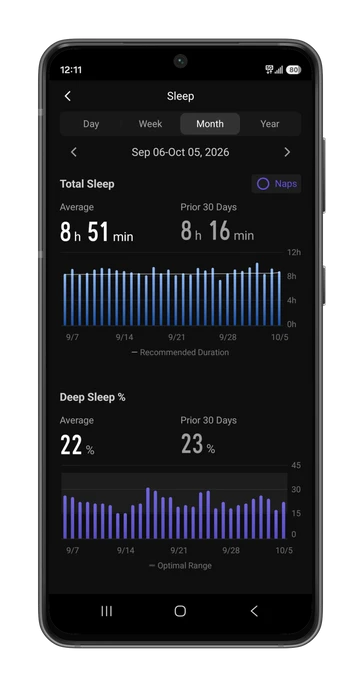
- Track your sleep: Objective data helps you understand patterns and opportunities to improve. The COROS app shows your total sleep time on the “Progress” tab.
Quality
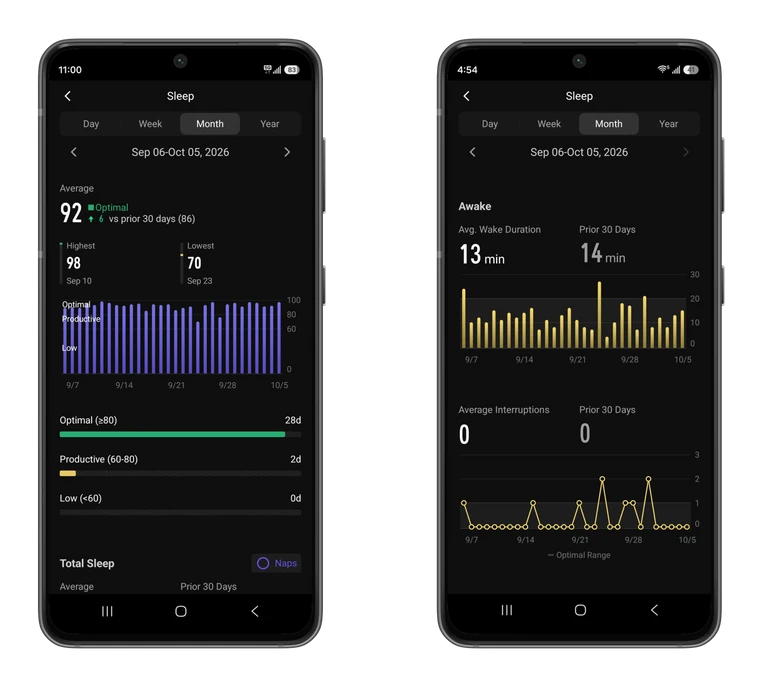
Reducing time awake during your sleep window is key to improving sleep quality. For the time you are in bed, you want to be as efficient as possible. This means reducing awake time, and ensuring that you allow your body to take whatever sleep it needs. COROS handily tracks the amount of time you spend awake during the night, and displays it in the app.
All the tips that help improve sleep quantity apply here too, especially minimizing noise and disruptions. But if you are someone who wakes up during the night, there are two strategies that I have found effective with athletes:
- Be physically ready for rest: Being sufficiently physically tired (not overtired) can help support deeper sleep. If you're training regularly, you're likely already meeting this condition.
- Try a brain dump before bed: Brain-dumping is simply writing (dumping) all of your thoughts out onto paper right before you go to bed. This helps reduce cognitive load and makes it easier to fall back asleep if you wake up in the night. Many athletes find that simply seeing a lingering thought written down lets them relax and let it go until morning.
Consistency
More and more evidence is emerging highlighting the benefits of a consistent sleep schedule. Going to sleep at a similar time each night, and waking up at a similar time each morning can help with energy, fatigue and even reduce mortality risk in the long-term. That said, consistency can be hard to maintain when travel, training, and life obligations vary. The key is to aim for regularity most of the time.
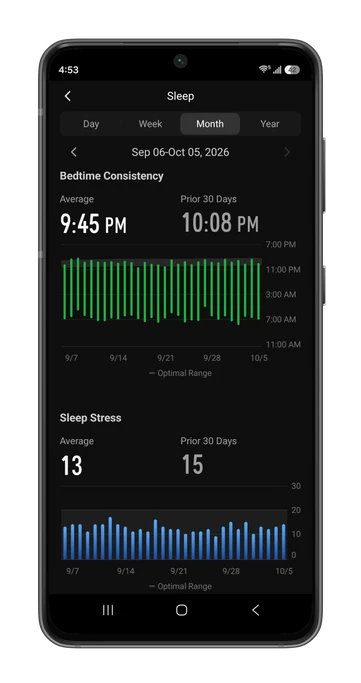
Some tactics and behaviours that can help you become more consistent with sleep regularity:
- Set a bedtime alarm: We set an alarm to wake up, why not try setting an alarm going to bed? Like mentioned above, this can act as a catalyst to start to wind down and relax.
- Leave your phone outside of your bedroom: Another one that we mentioned before. This will help reduce the likelihood of the late night scroll, and keep you on track to going to bed at your normal time.
- Anchor your day with regular meals: Eating at the same time each day supports your circadian rhythm.
- Getting sunlight in the morning, when possible. Even a cloudy morning is brighter than inside, so if you aren’t a morning-trainer, it’s still worthwhile trying to get outside for a few minutes.
- Zoom out when reviewing your data. Don’t worry about one late night or early morning. Look at the weekly or monthly view instead. As long as the majority is consistent, that’s great.
Pulling it all together
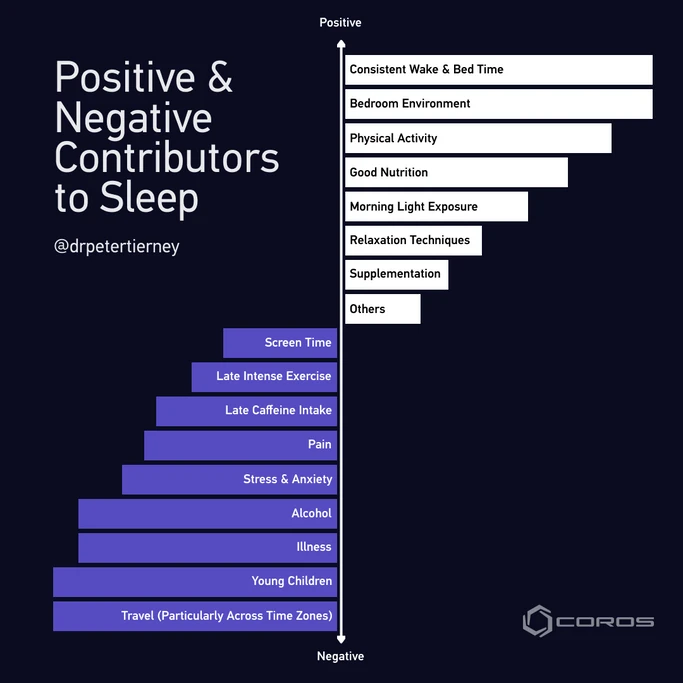
This image is a useful reminder of the largest contributors to sleep, both positive and negative. If you are someone who struggles with sleep, start at both ends first and work way back in towards the middle.
Key Takeaways:
- Use the S.L.E.E.P. acronym to remember how to sleep better:
- Same time to bed and to wake
- Light in the morning
- Environment set up for success
- Eat well
- Physically active
- You can pull 3 levers to impact your sleep - quantity, quality and consistency. Ideally all 3, but sometimes one can help!
- Zoom out. 1 short night of sleep is not the end of the world, if for the most part, you are consistent.
- Sleep is the foundation of your health & recovery from sessions, and whilst other strategies are useful - they cannot replace good, consistent sleep.