

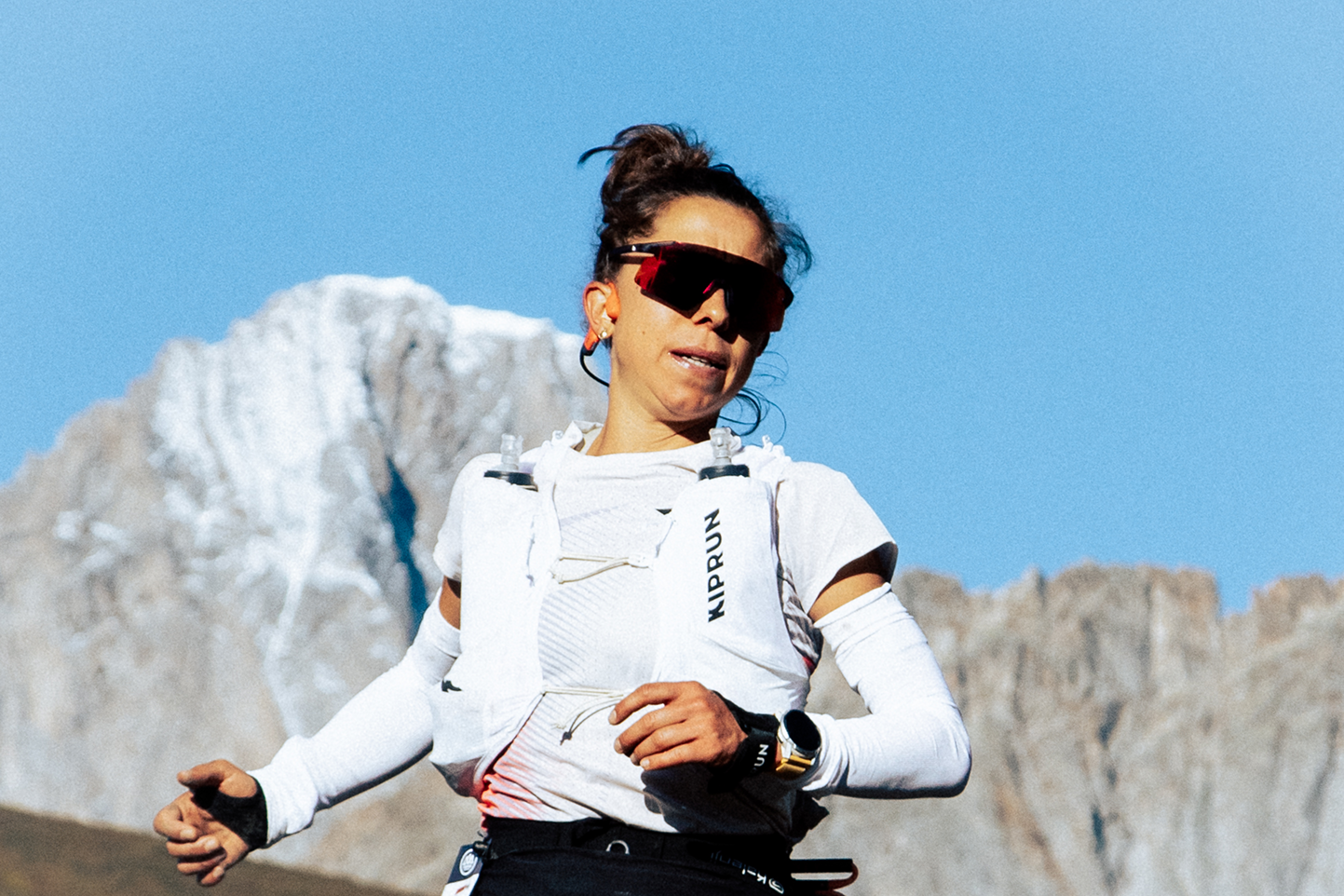
21 hours, 54 minutes and 49 seconds.
That's how long it took Blandine L’Hirondel to complete UTMB in 2026. It is the fastest time ever recorded by a woman at UTMB and makes Blandine the first woman to break the 22-hour barrier.
To fully understand the scale of this performance, we need to go back two years. In 2024, Blandine finished UTMB in 24:35:55. It was a strong fifth-place performance, but one that gave her valuable information about how she wanted to approach the race differently the next time around.
After dealing with an injury in this year's lead-up to UTMB, Blandine knew that forcing the opening kilometers could put the second half of her race at risk. Her strategy was to remain controlled early and preserve her ability to perform later. She identified specific portions of the course where she wanted to improve, and executed to perfection, cutting hours off her time.
To find out how she got there, we compared Blandine's COROS data from her 2024 and 2026 UTMB performances. What we found is a lesson in pacing, durability and one of the most important skills in endurance sports: knowing when to spend your effort.
Breaking Down Blandine's UTMB
There are many ways to analyze an ultramarathon. Pace tells us how quickly an athlete moved. Heart rate gives us insight into cardiovascular demand. Effort Pace helps account for how changes in terrain affect running effort. Elevation tells us what the course was asking of the athlete.
None tells the whole story alone, so we've divided both of Blandine's UTMB performances into six major sections and looked at them together.
Because the UTMB course differs slightly between editions, section times shouldn't all be treated as perfect one-to-one comparisons. Instead, we use distance, elevation, pace, Effort Pace and heart rate together to understand how Blandine's race changed.
One pattern immediately stands out. Her heart rate declined in both races, but for two entirely different reasons.
Start → Les Contamines: Patience First
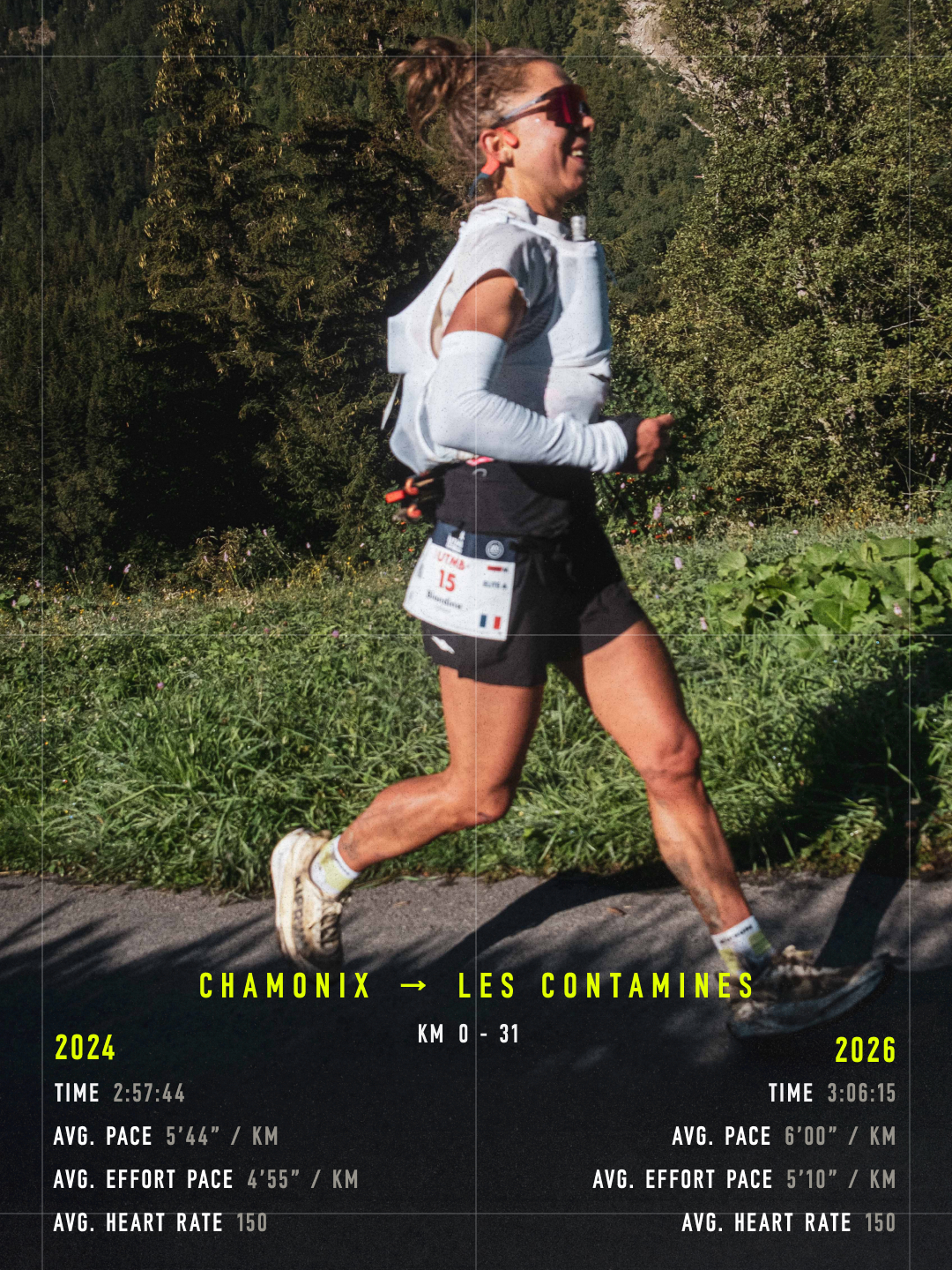
At first glance, Blandine's opening data looks surprisingly similar. The average heart rate is identical, but the performance is not. In 2024, Blandine produced a faster 4:55/km Effort Pace. In 2026, that dropped to 5:10/km.
On its own, that's not usually a number you want to see. But her heart rate never left low-Zone 3, and the plan called for exactly this. Slower kilometers, especially downhill, also meant less impact on her legs — freshness she'd spend later. Unlike a marathon, there was little reason to judge Blandine's UTMB after 30 kilometers. She still had more than 140 to go.
Les Contamines → Courmayeur: The Two Races Begin to Separate
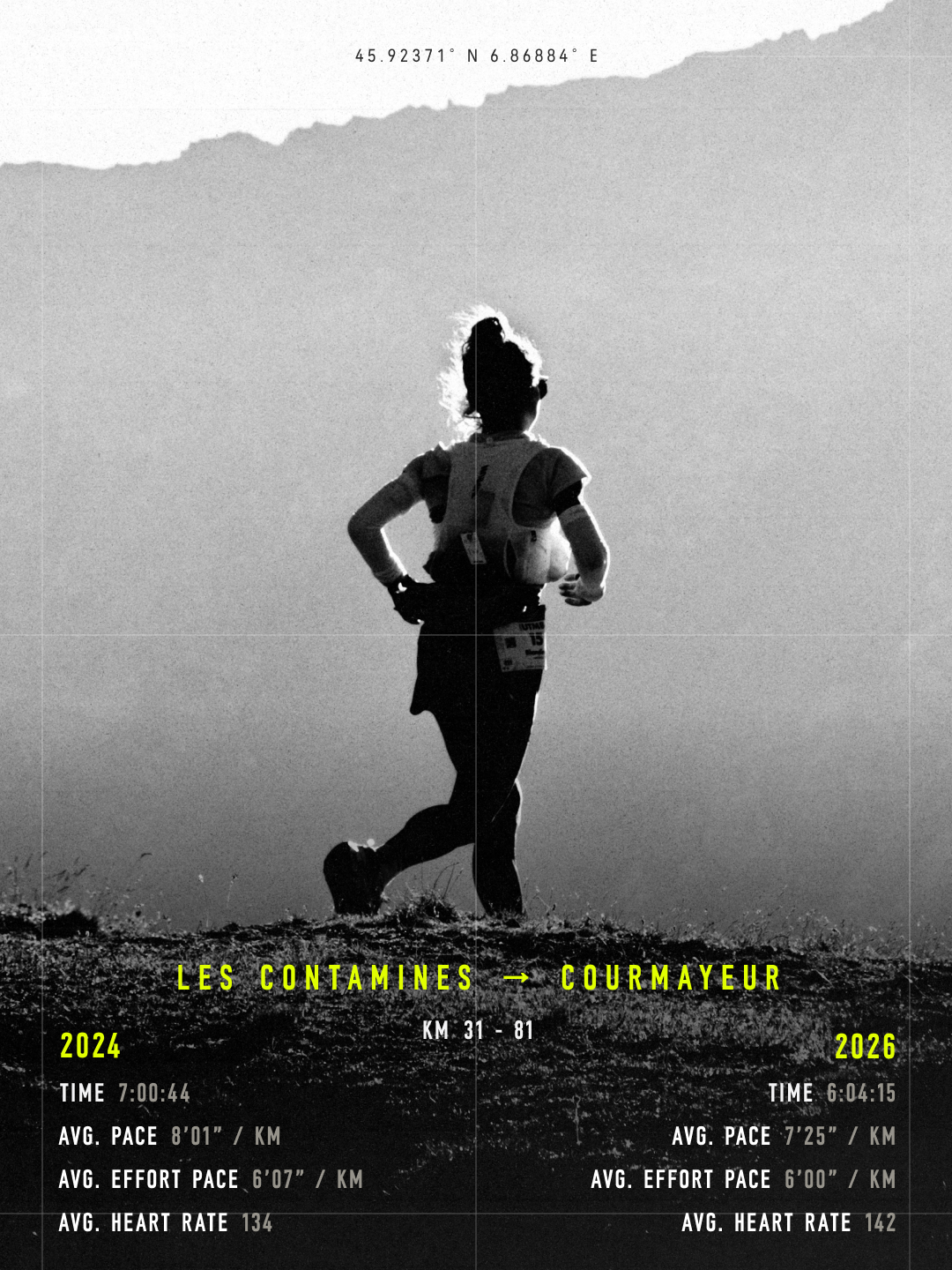
Blandine's average heart rate in 2024 fell 16bpm from 150 to 134 bpm. In 2026, it only fell to 142 bpm, an 8bpm drop, and she was already moving 39 seconds per kilometer faster than she had at the same point two years earlier.
There are several possible contributors. Fitness, conditions, fueling, muscular fatigue, course differences, and race dynamics can all affect heart rate and performance. We cannot attribute the difference to pacing alone, but the shift back in her favor was already visible here. She was making up ground on her 2024 self, and her heart rate was cooperating. Instead of fading the way it had in 2024, it stayed elevated and responsive, the first sign that patience in the opening 30 kilometers was starting to pay off.
Courmayeur → Grand Col Ferret: The Difference Emerges
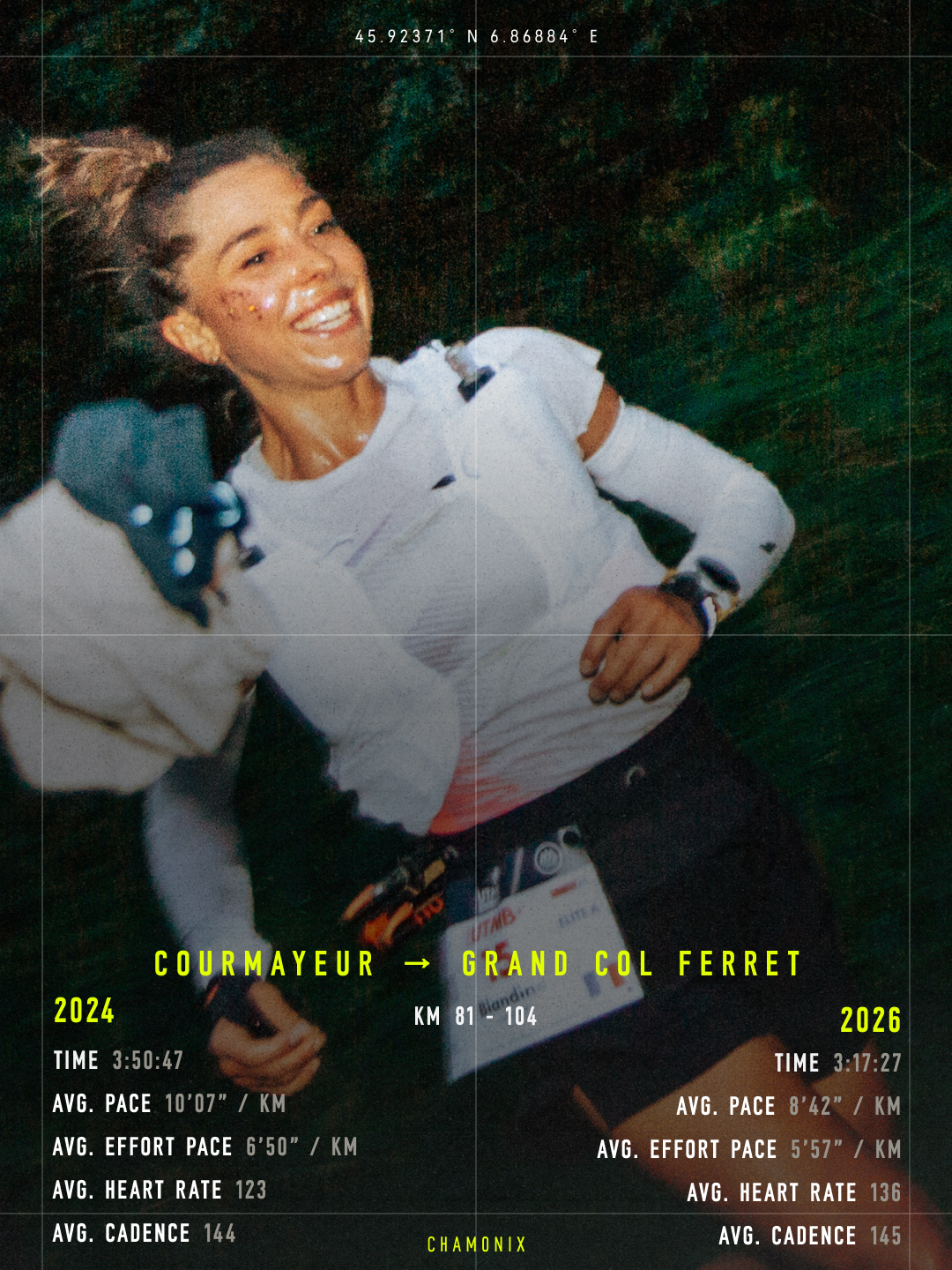
Blandine covered this section more than 33 minutes faster in 2026. Over 22 kilometers and roughly 2,000 meters of climbing, her Effort Pace was 53 seconds per kilometer faster and her average heart rate ran 13 bpm higher.
Higher heart rate isn't automatically better; forcing it would be poor strategy. Here it means Blandine still had access to a level of cardiovascular output that wasn't there in 2024, likely because that race's faster opening had already spent it.
Climbing is also a muscular test, and her nearly identical cadence shows it. Rather than taking quicker steps, she was putting more power into each one, the freshness from the Courmayeur descents showing up as strength here.
Grand Col Ferret → Champex-Lac: The Key Section
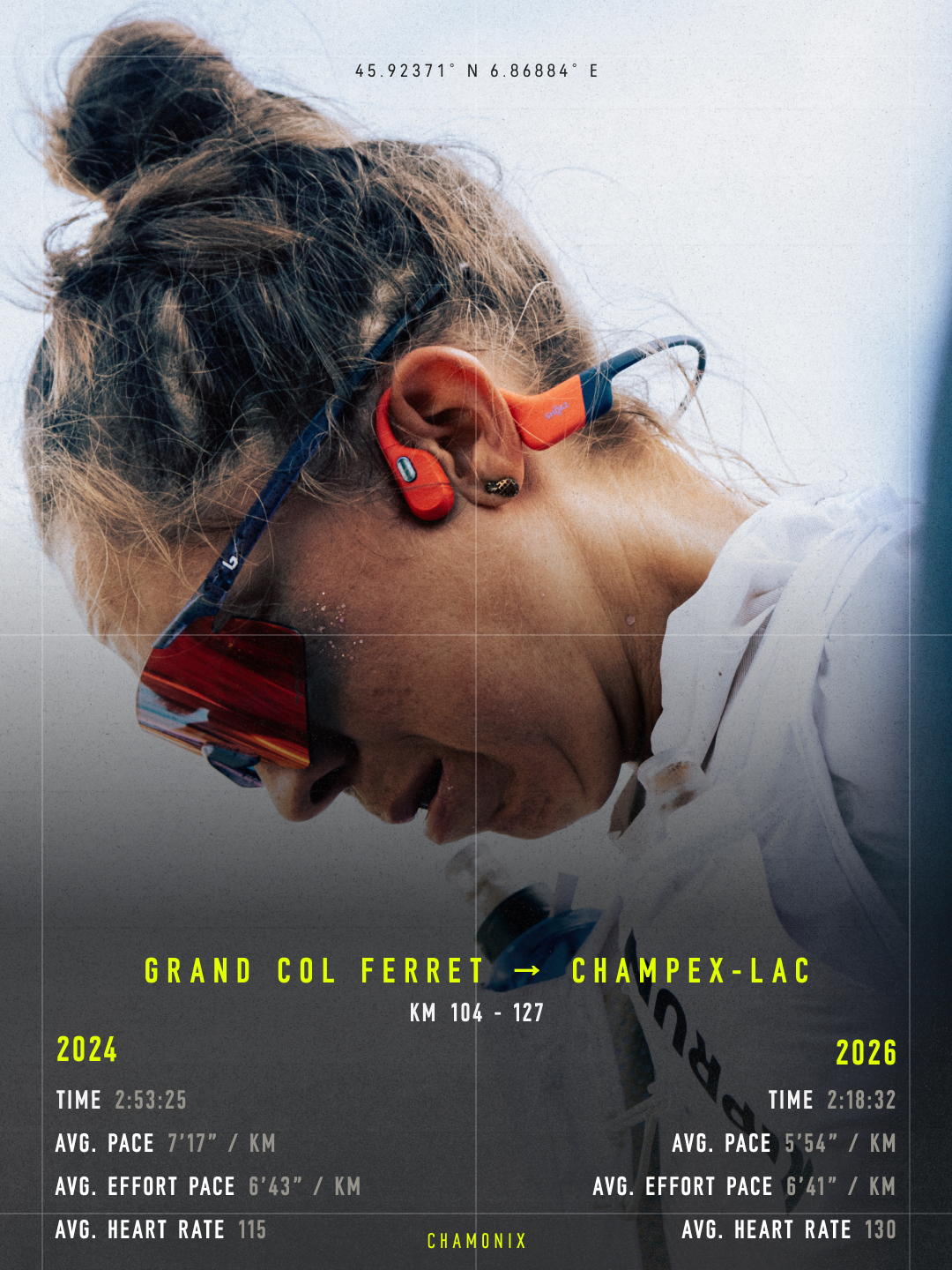
Before UTMB 2026, Blandine had flagged this as the section that cost her the podium in 2024. More precisely, it was the back half of it: La Fouly to Champex-Lac.
She ran that stretch in 1:22:37, down from 1:48:54 in 2024. A gain like that this late in a race is the return on everything she'd been protecting since Les Contamines: cardiovascular reserve and leg freshness, finally cashing out.
What Heart Rate Does and Doesn't Tell Us
Across the first four sections, Blandine's average heart rate tells its own story:
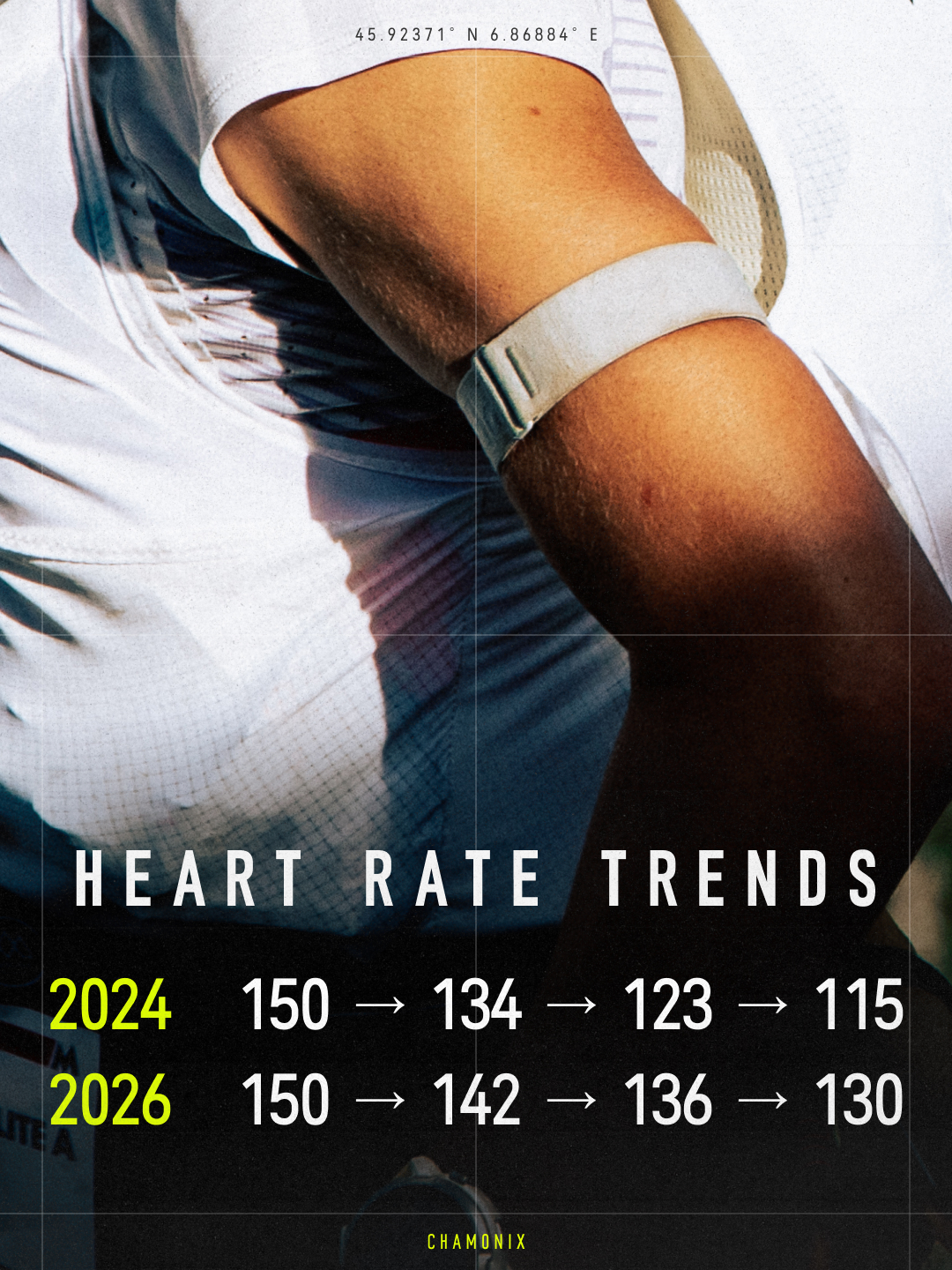
The gap between the two races grew every section: 0 → +8 → +13 → +15 bpm.
It's easy to read that trend as the reason she ran faster, but that's the wrong conclusion. Remember, heart rate is downstream of dozens of factors. It doesn't cause performance, it reflects it.
What the trend does show is intent. A single section running hot could be a favorable stretch of trail. A gap that builds for three sections straight is the signature of a plan being executed. Blandine consciously held back early so she'd have more to give in the sections that mattered. That's what let her push harder later, and why she started to build a lead through the night.
Champex → Trient: Everyone is Tired
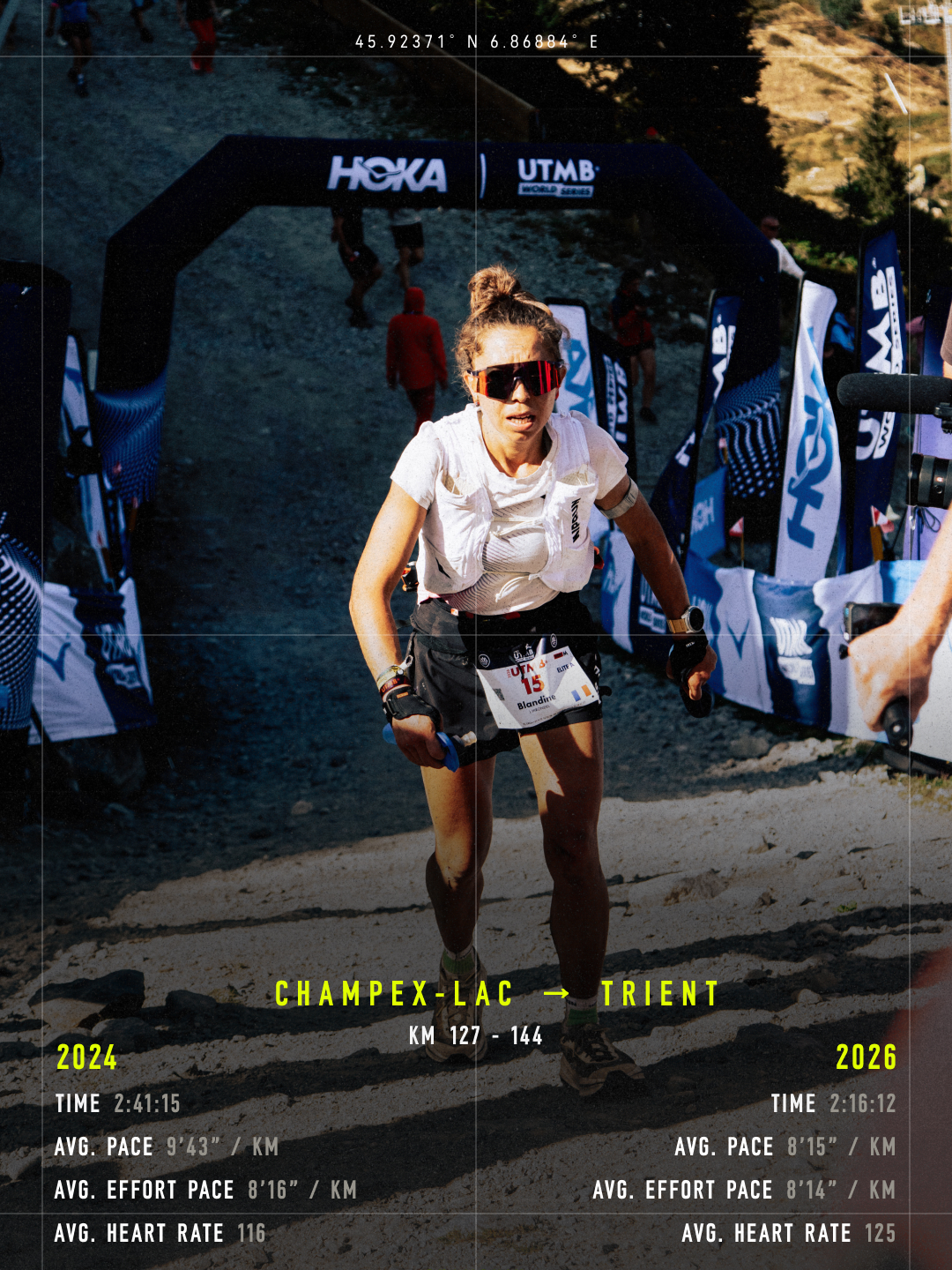
The Effort Pace numbers here are nearly identical while her raw pace was 88 sec/km faster. Effort Pace is a personalized grade adjustment, meaning it also reflects how efficiently an athlete moves over that specific terrain. A flat Effort Pace paired with a faster raw pace means Blandine is better at this style of terrain than she was in 2024.
It's also important to note that while the physiological numbers were starting to narrow, this is expected. Fifteen-plus hours into a race like this, everyone is spent, Blandine included. The difference isn't that she avoided fatigue. It's that spent it at the most advantageous times for her.
Trient → Chamonix: The Finish
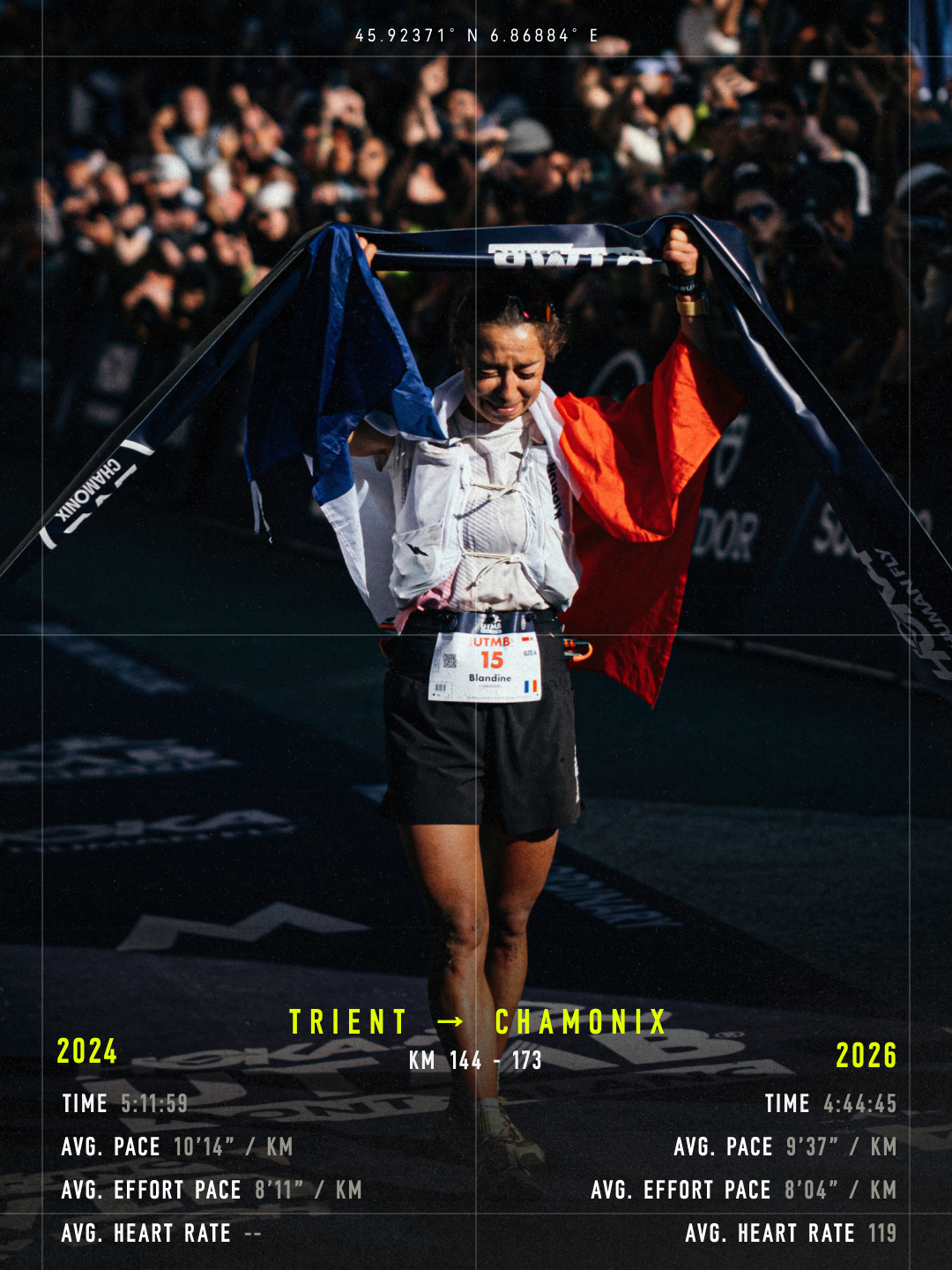
After more than 17 hours, her final section included another 1,700+ meters of climbing. However, over the last 5 hours, Blandine's execution remained exactly on track for how she set herself up for success. Another 37-minute gain over the 2024 edition.
Blandine finished as the first woman to run sub-22 hours at UTMB and the third athlete ever to win OCC, CCC, and UTMB. She thanked the crowd for all of their support, while demonstrating a masterclass on energy preservation and how to utilize what your body has when it matters most.
A Different Way to Think About Pacing
Athletes often think about pacing as a speed limit. Blandine's UTMB provides another way to think about it. Pacing is about resource allocation. Ultimately every athlete has a finite amount of energy, muscular capacity, and physiological output available. The question then becomes not "how fast can I run?", but moreso "where will my efforts create the most value?"
For Blandine, burning resources early wasn't good enough in 2024. She made the conscious decision to allocate resources between 30-140km's in a more spread out approach. The result speaks for itself: The fastest woman to ever run the course.
Three Things Every Athlete Can Learn From Blandine
These principles apply to any athlete, on any trail.
1. Use Your Previous Race as Data
After your next race, ask where your performance began to change. If pace falls while effort stays high, fatigue is accumulating. If pace and heart rate fall together, fueling or muscular fatigue may be limiting you. If the same climb causes trouble every time, you've identified a training gap.
2. Don't Judge Your Race Too Early
Through the first 31–32 kilometers, Blandine's Effort Pace was actually slower in 2026 than in 2024, at the same heart rate. Nothing there predicted a historic race. By Grand Col Ferret, she was 53 seconds per kilometer faster. Your opening split doesn't tell you if your pacing worked. What you're capable of later does.
3. Preserve the Ability to Make a Decision
Good pacing won't make you feel good late. It will, however, unlock some options: the ability to push a climb, respond to a competitor, or just keep moving when others can't. Blandine's heart rate fell in both years, but she held a higher output for longer. By purposefully slowing down early, she preserved the ability to have options later. That, not any single split, is what won her the race.
COROS Analysis
This analysis was built using COROS Training Hub and its MCP integration. Blandine wore the APEX 4 46mm and COROS Heart Rate Monitor throughout the race, the same tools available to any COROS athlete. Congratulations to Blandine on a record-setting day, and on proving exactly what patient pacing can do over 170 kilometers.