


Running more miles can improve endurance, efficiency, and race performance. It can also increase injury risk if you move too fast.
Increasing volume should be done in a sustainable way, so you can handle the new mileage for months at a time, not just a week or two. Here is how to do that safely and strategically.
Start with the 10% Rule
The 10% Rule is simple: increase your weekly mileage by no more than 10% compared to the previous week.
If you ran 25 miles last week, you'd aim for 27 to 28 this week.
Every third or fourth week, reduce volume slightly. That down week allows your body to absorb the training and come back stronger. The down week is for the muscles, tendons, and bones that are not used to increased mechanical stress. Gradual progression gives your body time to build structural resilience.
It is important to note that the 10% Rule is a guideline, not a universal law. Some situations allow for slightly larger increases, while others require a more conservative approach. We outline a few common scenarios in the sections below.
COROS Suggested Training Load
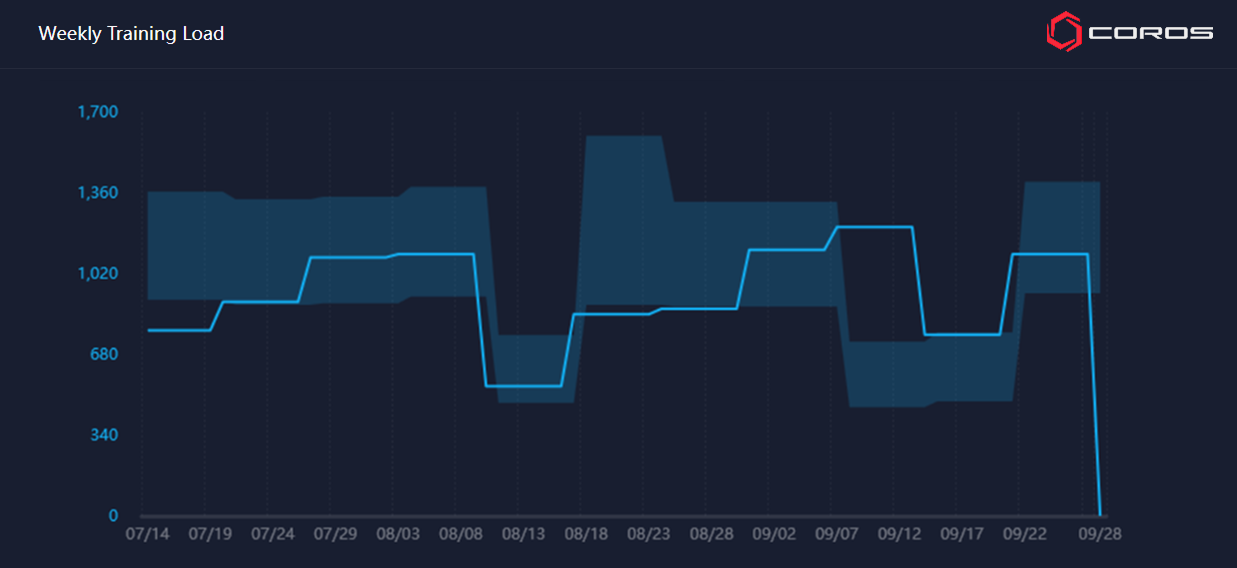
Not all miles are created equal, and intensity can play just as much of a factor when it comes to balancing your training.
Training Load combines volume and intensity into one number, allowing you to more accurately measure the stress on your body.
Each week, COROS provides a Suggested 7-Day Training Load based on your Base Fitness and recent training. As you increase volume, check that your weekly load stays within that recommended range. The suggested values will also include a down week after three consecutive weeks of growth.
Recovery Drives Adaptation
If you increase mileage but neglect sleep, underfuel your runs, or stack stress from work and life without managing it, your body will struggle to absorb the load. Your training adaptations happen during the recovery process, so increasing load without proper recovery can be risky.
Use COROS metrics to confirm you are absorbing training:
- Rising Base Fitness
- Stable or improving Efficiency Score
- Normal Overnight HRV trends
- Stable or decreasing Resting Heart Rate
If HRV drops, resting heart rate trends upward, or easy runs feel unusually hard, do not push the next mileage increase. Hold steady and work on your recovery habits first.

Don't Forget Strength Training
When you take time off from running, or if you are new to the sport, your body is not accustomed to the impact forces of running. Despite being a bodyweight movement, running places significant mechanical stress on your muscles, tendons, and bones.
Your aerobic system can take months to detrain. Structural resilience fades much faster.
Strength training helps rebuild that durability. For beginners and returning runners especially, strength work supports tissue adaptation and reduces injury risk as mileage increases.
Case-Specific Guidance
If You Are a Beginner
When just starting out as a runner, your first goal is consistency. Spread weekly volume across 3 to 5 runs rather than concentrating it into one or two long sessions. Building the habit of moving most days, even with short runs, improves recovery and long-term adaptation.
Volume typically increases as you increase frequency. Once you consistently run several days per week, small weekly increases become more manageable.
Base Fitness may rise quickly at first. That does not mean your tissues are ready for large jumps in mileage. Beginners often experience a few aches and pains as their body adjusts to the new movement. If you increase volume too quickly, it can be difficult to distinguish these from damaging injuries. Often it is best to take a conservative approach, with a mindset towards long-term growth rather than quick progress.
Not sure where to start? Try exploring our training plan library. Each plan follows the principles of safe and effective increases in volume.
If You Are Returning After Time Off
When returning to running after a break, progression often happens faster because the movement is familiar. However, tolerance to impact still needs to be rebuilt.
The length of time away will determine how quickly you can return to previous mileage.
A few loose guidelines:
- Less than 3 weeks off: Return to full volume in 2-3 weeks.
- 3-6 Weeks: Return to full volume in 4-5 weeks.
- 2-4 Months: Return to full volume in 6-8 weeks.
- 4-12 Months: Return to full volume in 6-12 weeks.
- 1+ Years: Rebuild consistency and follow the 10% Rule
If you're returning from injury: Regardless of the amount of time you were sidelined, consult your physician for a return-to-running plan. Different injuries will have different timelines and training modifications.

The first week back often feels harder than expected. Perceived intensity is higher and you may experience some soreness. This typically settles within one to two weeks as your body readjusts.
Most athletes reach 50-70% of full volume relatively quickly, but be cautious about the remaining 30-50%. As you approach your previous peak mileage, slow your rate of increase and move closer to the 10% Rule.
Watch your Intensity Trend closely when increasing. If it rises above 150%, we recommend scaling back to avoid injury or burnout.
If You Already Run Consistently
If you are already running 4 to 6 days per week and handling steady mileage, increasing volume should have a clear purpose.
More miles are not always better, and do not automatically improve your race times. Increases in volume should support specific goals such as improving aerobic capacity, preparing for a longer race distance, or raising your Base Fitness to handle higher quality sessions later in the season.
Before adding mileage, ask:
- What is this extra volume helping me achieve?
- Can I currently recover well from my existing workload?
- Am I changing more than one training variable at a time?
Even for experienced runners, volume increases should stay modest. A 5 to 10% weekly increase is usually appropriate. Every 3 to 4 weeks, reduce total volume by 10 to 20% for mechanical recovery.
It is also important to maintain your intensity distribution. Aim to keep roughly 80% of your running at easy aerobic effort and 20% at moderate to high intensity. Athletes that stray too far from this (10% in either direction) often see a plateau in performance.
There are risks with increasing volume, but those risks are mostly tied to impatience. Runners who gradually build their mileage, respect deload weeks, and stay disciplined with intensity are typically rewarded with higher fitness and stronger performances.