


If your training feels flat, or maybe you’re looking for that extra edge late in races: plyometrics might be the tool you’re missing. These explosive movements train your body to store and release energy quickly, helping you move with more speed, strength, and efficiency.
Whether you're building stride power for a mile, improving control for long trail descents, or just adding variety to your strength routine, carefully-planned plyometrics can help you move better and feel stronger.
What are Plyometrics For?
Plyometrics focus on powerful, explosive movements. At their core, these exercises teach your body to store and use elastic energy, improving how efficiently you run, jump, and climb. The key adaptations include:
- Better force production: More power in every stride, pedal, or push-off.
- Improved neuromuscular coordination: Quicker, more precise muscle engagement.
- Injury resistance: Enhanced joint stability and tendon resilience.
For short-distance runners, this translates to faster acceleration and sharper turnover. Mid- and long-distance athletes benefit from better form retention and stronger strides late in races. Ultra runners gain efficiency and durability, while mountain athletes and climbers get crucial improvements in explosive strength and control on variable terrain.
Download Your Plyometric Workouts
COROS Coaches have designed four plyometric workouts for athletes to download.
You can load them directly to your COROS watch using the Training Hub or COROS app. Your watch will walk you through the workout, track your sets, and show an avatar demo of each movement.
Plyometric exercises create high forces and require coordination, balance, and landing mechanics to be safe and effective. Before beginning any plyometrics, make sure you have a solid strength foundation (especially in your legs and core). When you jump, you should be able to land softly and in control, absorbing impact on the balls of your feet without wobbling or slamming your heels down.
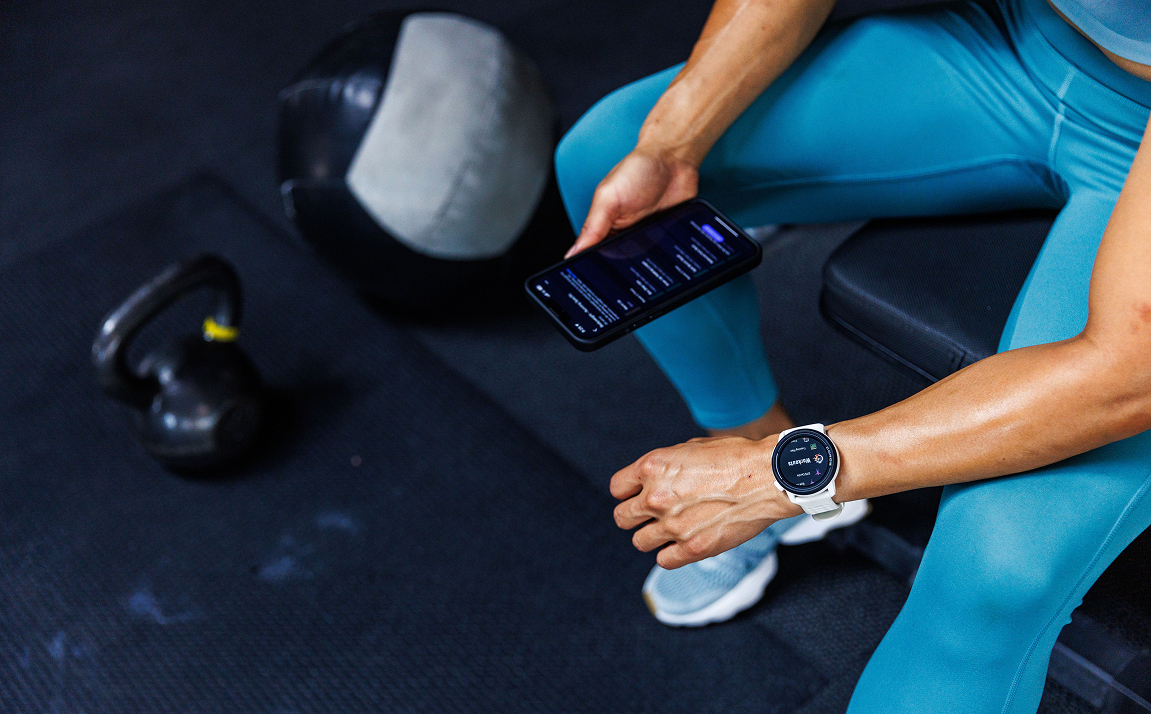
You can download more workouts & training plans from our official library in the COROS App
Workout Guidelines
Not all plyometric movements demand the same prescription. Skipping rope is fundamentally different from a box jump. It’s important to adjust your volume and rest based on the impact level and purpose of the exercise.
Low-impact drills (like jump rope or quick line hops) can be performed for time (30–60 seconds) or higher reps (20+). They still demand good form, but are better suited for coordination, rhythm, and warming up.
Moderate to high-impact drills (like bounding, hurdle hops, or box jumps) should be more limited. Prioritize maximum effort and clean landings, with 2–4 sets of 3–6 reps per exercise. Total ground contacts per session should stay under 60 for most athletes.
The most important rule is to never let form break down. Plyometrics are power-based, meaning you’re training your nervous system to fire explosively. That kind of recruitment requires fresh reps and full attention. Take at least 60 to 90 seconds between sets. If jump height starts to drop or landings feel off, you've reached your limit for the day.
Types of Plyometrics
All plyometric movements are explosive, but not all plyometrics look the same. Climbers may need upper-body explosiveness to power through overhangs. Runners, on the other hand, typically benefit most from lower-body plyometrics that reinforce stride power and landing control.
Plyometric exercises also vary in their direction, also known as planes of movement:
Sagittal plane (forward/backward): This is the most common movement pattern for runners. Exercises like broad jumps, split squat jumps, and bounding fall here. They help road runners and track athletes build linear power and improve stride length and turnover.
Frontal plane (side-to-side): These drills challenge lateral stability and are critical for athletes who move in unpredictable directions (think lateral bounds, skater hops, or lateral box step-offs). Trail runners can benefit here, especially on uneven terrain or when descending technical downhills.
Transverse plane (rotational): Less common but still important, rotational movements train your body to resist or control twisting forces. Exercises like rotational jump squats or medicine ball throws are useful for climbers and obstacle course athletes.
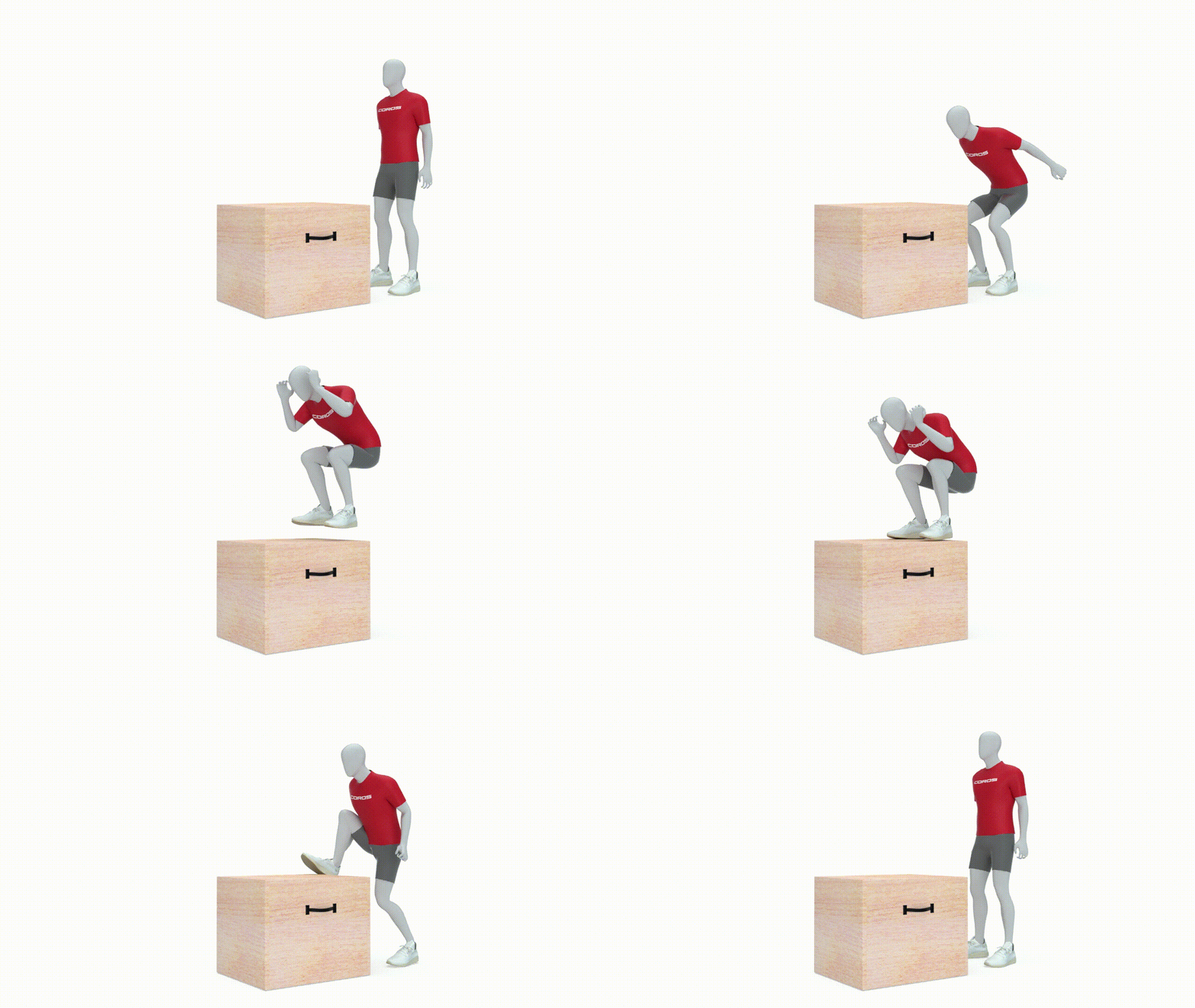
The COROS App will show animations of your exercises
Where Plyometrics fit in Your Training
Plyometrics are high-quality, high-intensity work. They belong in your training when your body is fresh and your focus is sharp. Within a single training day, the best time to do plyometrics is after your warm-up and before a strength session or easy run. You can also run plyometrics as a standalone session, but don't forget to warm up first!
Within your broader training season, plyometrics usually fit best in the pre-competition phase, after you’ve built your aerobic base but before you start to peak and taper. Avoid introducing plyometrics during periods of high fatigue or late-stage taper. They require energy and recovery, just like speed work or heavy strength training. Done right, they’ll support better movement and stronger results in competition.
/filters:quality(90)/fit-in/576x432/coros-web-faq/upload/images/faef3ea2aec4ee6a297ea30d67431ec9.png)
/filters:quality(90)/fit-in/576x432/coros-web-faq/upload/images/5048d6364c5105657294ad180498c0e6.png)
/filters:quality(90)/fit-in/576x432/coros-web-faq/upload/images/cf1ab2a6d20abf7cf3fe7289937303bb.jpg)
/filters:quality(90)/fit-in/576x432/coros-web-faq/upload/images/f3094db0f5ce04de9b863bfea8cefcba.png)
/filters:quality(90)/fit-in/576x432/coros-web-faq/upload/images/0dda9c8bab5c2d69d3fee6e927be88ce.png)
/filters:quality(90)/fit-in/576x432/coros-web-faq/upload/images/464e1c339c14f437d3bed95ea885c76f.png)
/filters:quality(90)/fit-in/576x432/coros-web-faq/upload/images/bb3f10fbc33dbe425098d0ad9e0388db.png)
/filters:quality(90)/fit-in/576x432/coros-web-faq/upload/images/66cadea87fe7cdccd30f39cbf8cc757d.png)
/filters:quality(90)/fit-in/576x432/coros-web-faq/upload/images/a2cbdcb8b6c7e0a52a3e91f68f5f30fd.png)
/filters:quality(90)/fit-in/576x432/coros-web-faq/upload/images/0df9e231b9352e5242d5f4f8c6c26e79.jpeg)