


A Different Kind of Starting Line
Most athletes follow a structured plan around a specific race. Emelie Forsberg was like that for many years, training for mountain races and preparing for every possible scenario.
Things aren’t like that for her now. She’s a mother of 3, a new reality that doesn’t have racing plans, tapers, or any guarantee of recovery. It’s a reality where performance became secondary and energy, time, and attention are constantly redistributed. It introduces a form of endurance far more complex than any race.
Motherhood didn’t replace the training, though. Emelie hasn’t stopped going into the mountains. She couldn’t stop if she tried; it’s part of her DNA. It just looks different now.
The Invisible Ultra: Where Motherhood Mirrors Endurance Racing
At first glance, motherhood and ultra running don't appear to have much to do with each other. But look closer, and the parallels become clearer.
Patience
In ultra-distance racing, patience is more about control than it is about waiting. You have to temper your reactions, even when everything around you pulls you forward. Early on, everyone can go faster, but the wise ones hold steady.
Motherhood requires that same controlled patience, but you lose the structure of a race. There's no route to follow or distance to the finish. Often there aren’t even clear signals that you're on the right track.
“I've become much more patient with three kids. And it's so important. It's about not getting stressed, not getting angry, just taking time. You learn to just accept what it is and do the best out of it… take big breaths.”
Some days stretch endlessly, and others pass before you've had time to process. Most of the time, you're simply in it: adapting, responding, doing what the moment asks of you. Over time, that quiet consistency forges its own form of endurance.
Adaptation
In the mountains, nothing stays the same for long, and you must always be ready to adapt to terrain changes and weather shifts. Motherhood brings the same unpredictability in a different form. Plans exist, but don't always hold, and sleep becomes a commodity rather than a given.
For Emelie, this means letting go of the idea of perfect training. Sessions became very flexible, where some days were shorter than planned or disappeared entirely.
“I've become pretty good at adapting my training. I rather do less and recover in between, and that has been working well for me. I know that if I do too many big days, then I need to pay the price for it.”
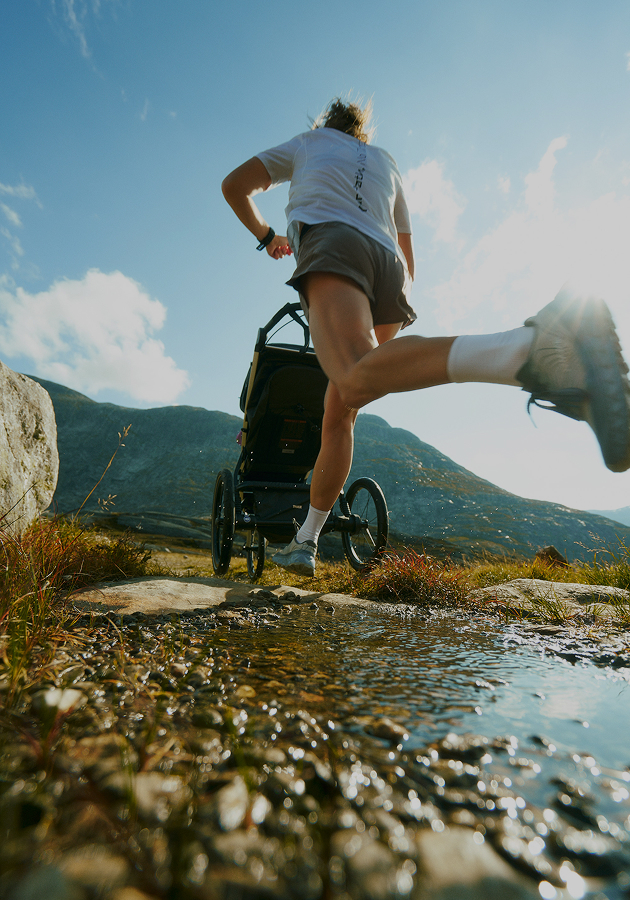
Long-term adaptation is another parallel. Most understand that it takes years of practice to ace a technical downhill on command, but the same applies to parenting. Every unfamiliar situation is a challenge at first, but each one quietly expands your knowledge base. Over time, you also build something less tangible: a comfort with the unknown itself. Enough unexpected moments, and you take everything in stride. Mastery comes from experience, both in competition and motherhood.
Endurance
In ultra running, the hardest part is the accumulation of time under stress, rather than one specific moment. The greatest challenge is the slow build of fatigue that weighs on you when the finish still feels far away.
Motherhood is built on a similar accumulation; a constant drumbeat of physical, mental, and emotional challenges that are often invisible from the outside.
“Even though it's tough, you just keep your head down and do your best. You will have some really nice moments, and some hard ones… but in the end, it's wonderful.”
In motherhood, there's no finish line waiting at the end of the day, only the start of the next race.
Does Being a Pro Athlete Help?
In some ways, yes. Being a professional athlete gives you an understanding of staying calm under pressure, but motherhood works differently. Effort doesn't always translate as expected, the structure fades, and what's left is the ability to respond to what's in front of you.
Making Space for Sport in Motherhood
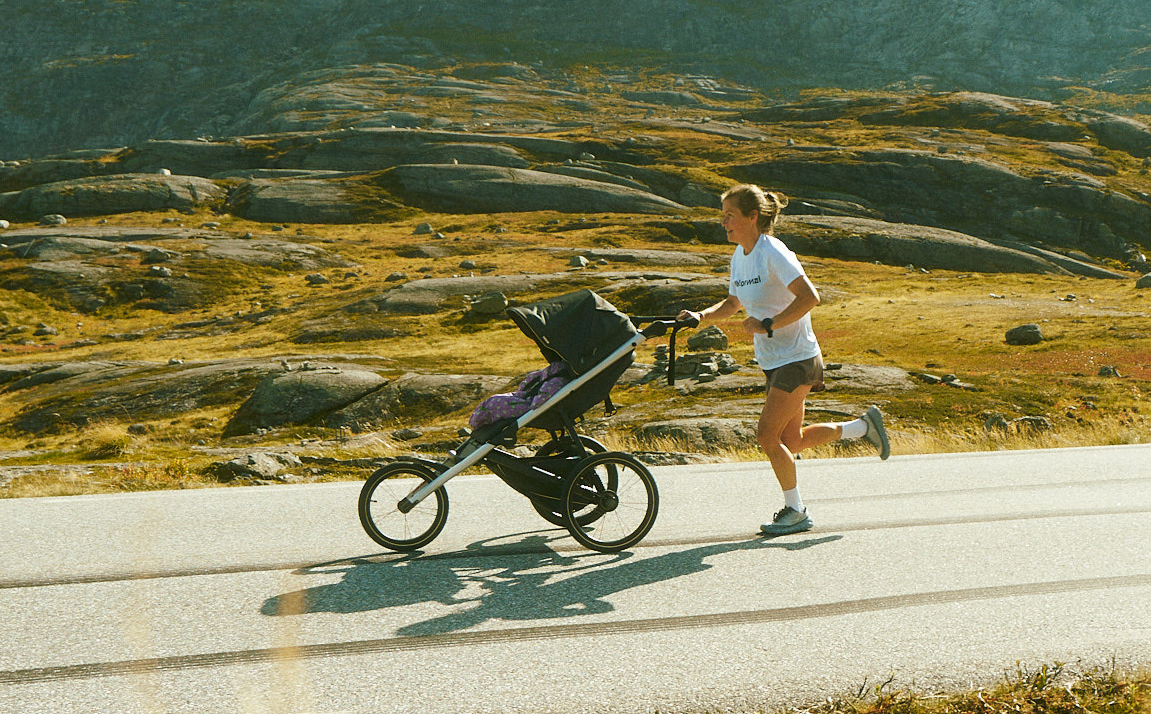
Returning to training after becoming a mother is about building something new, rather than putting too much pressure on yourself to pick up where you left off.
Training Becomes Opportunistic
During motherhood, training doesn't sit at the center of the day anymore, it instead finds its place within it. Sessions happen when time allows. Sometimes that window is wide open, but more often it's narrow.
“My structure has absolutely changed. I'm much more flexible now. I make a bigger plan for maybe three weeks, and then I adjust within that.”
That shift doesn't mean less intention. If anything, it requires more intention to maximize the available time. What used to be long, open days in the mountains becomes something more contained. Each session still has a purpose, but it adapts to what the day can realistically offer.
“I find it interesting… before I spent many hours in the mountains, now I'm more structured. And both ways can lead to a high level.”
Emelie's preparation for Transvulcania Ultramarathon this year reflects that new style.
“Before Transvulcania, I did two long runs of 3–4 hours, one faster session, and easy runs in between. Sometimes treadmill, sometimes heat, sometimes altitude.”
The framework and mentality are still there, but more adaptable. Over time, consistency takes on a different meaning. You trade perfectly executed weeks and high volume for continuity of sometimes smaller, imperfect sessions.
Recovery Is No Longer Passive
In traditional training, recovery is part of the process. Rest days are scheduled, sleep is protected, and nutrition is carefully mapped out.
Motherhood changes that with fragmented recovery, interrupted sleep, and limited physical rest. Not to mention, the mental load rarely switches off. There are no full resets, no clean breaks between effort and recovery, just a constant overlap of both.
“Sleep is probably the most challenging. I don't remember the last time I slept eight hours in a row.”
In that context, recovery can no longer be left to happen on its own. It becomes something you have to acknowledge, adjust for, and protect when possible.
“If I had a really bad night, I often change the plan. But if I feel okay, sometimes I push through.”
Small adjustments start to matter more, such as slowing a session down, cutting a workout short, or choosing to rest instead of forcing it. Not as compromises, but as a way to keep everything sustainable.

Listening Over Forcing
With less structure, how you feel starts to matter more than what's written in a plan. Some days invite movement, while others beg for rest. Learning to recognize & accept both requires a different kind of awareness; not just discipline, but calculated discernment.
“When I feel overwhelmed, I scale things down. I focus on the basics.”
It's another skill that overlaps with sport: recognizing the difference between fatigue you can move through, and fatigue that needs rest. Sometimes (often the most difficult for athletes), it requires understanding that the right decision isn't to adjust the session, it's to let it go entirely.
Using Data as Awareness, Not Control
Training through motherhood does not need to feel messy. You can still inject data into training decisions. When used correctly, data becomes a way to stay connected to your body, and ground some decision making.
HRV reflects how your body is responding to stress: training, travel, lack of sleep, or daily life.
“When I travel or have busy days, HRV goes down. When I come home, it takes a few days and then it comes back up.”
Instead of reacting to a single value, look at trends. A consistent drop is often a sign to reduce load, even if you still feel capable.
A higher-than-usual resting heart rate can indicate accumulated fatigue or illness. It's one of the simplest ways to check your baseline. If it's elevated for several days, it may be a sign to keep sessions easy or shorten them.

With disrupted nights, perfect sleep isn't realistic. One bad night is manageable, several in a row usually requires adjustment, and being aware of these trends is key.
Sleep data helps you see your quality and quantity over time, so you can set expectations for the day.
Heart Rate during Training
During activities, real-time heart-rate feedback is often the most actionable.
“While training, if I see that my heart rate is not coming up, then I know I'm tired. So I decide to stop or to adjust the session accordingly.”
If your heart rate is suppressed, or unusually high for a given effort, it's often a sign the body isn't ready for intensity.
Training Load & Recovery Indicators
Looking at your recent load over days and weeks helps you avoid stacking too much fatigue. When recovery is limited, consistency becomes more important than adding intensity. These indicators help you stay within a sustainable range.
The key is simple: Metrics don't dictate the plan. They help you understand what's possible today. Pair that with the heightened awareness motherhood demands — of your own body, of shifting external factors, and everything you can't control — and you have something rare: data and intuition working together. That's the real superpower.
Returning to Competition: A Different Athlete
This season, Emelie Forsberg is back on the start line. Not as a return to who she was before, but as the next step in her journey.
“My mindset is different. I feel more relaxed. Life feels new, but also familiar.”
After three pregnancies, the comeback was very much in question. Coming back to high-level racing requires time, energy, and commitment. And for a long time, she wasn't sure how that would fit within everything else.
“At first I wasn't sure if I wanted to continue as a professional athlete. I know that it takes so much energy to come back to high level racing. I wasn't sure that I could maintain a good training and still have energy for being a happy energized mother. And actually I feel that now.”
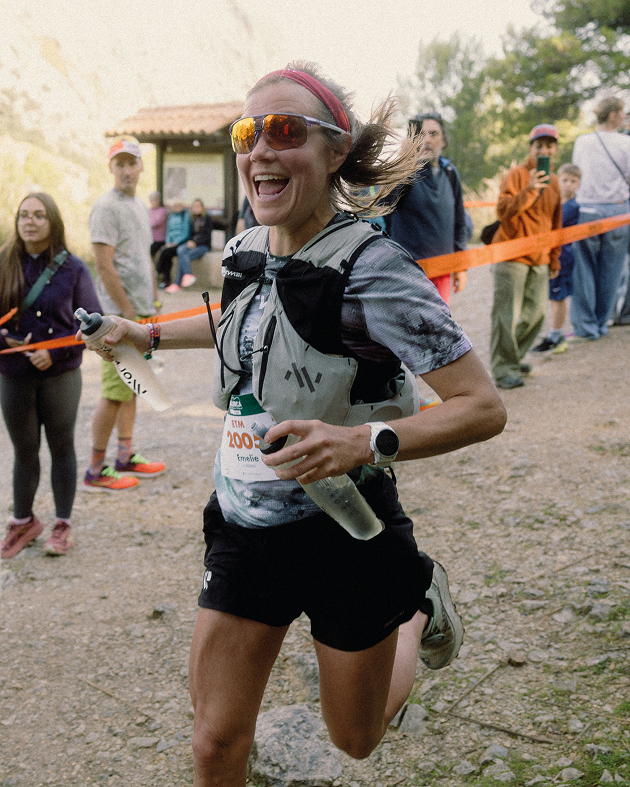
Now, that balance is starting to take shape. Emelie has new ambition and a deeper curiosity to see what's possible.
“I think I can still improve physically. So, if there's a time to go back to competition and give everything, it's now."
The mindset and priorities have shifted, but performance with a different definition is still meaningful. You can still do extraordinary things while chasing simple success.
“Success for me today is a good training session… and still having energy to be happy and energized with my family.”
What Emelie Reminds Us
There's no one-size-fits-all approach to balancing motherhood and athletics, but certain principles can help you build something sustainable.
First, keep moving, but remove the pressure to do it perfectly. Movement doesn't need to be optimal, it just needs to be consistent enough to stay connected.
“I think it's more and more common to stay active during pregnancy and motherhood. It helps you stay healthy and recover faster.”
Second, shape your training around the day, not the other way around.
This approach is the biggest shift for trying to perform at a high level while being a mother. The key is not to force the plan, but to work with the day. Some days will offer more time or energy than others.
Third, simplify decisions wherever possible.
Use simple signals, such as how you feel, how your body responds, and basic metrics to guide you. Avoid unnecessary fatigue by selectively optimizing sessions. If energy is low, reduce intensity, and if your body feels ready, take advantage of it.
And finally, accept that there is no perfect balance.
“Do what feels good for you. And if you're unsure, take advice from someone specialized.”
Continuity > Perfection. Staying in the process, even in small ways, makes a huge difference. In the end, that's what builds both endurance and everything around it.
As the 2026 trail running season unfolds, we wish Emelie Forsberg, and all mothers navigating sport and life, a meaningful season ahead. Whether that means lining up with ambitious goals, finding consistency in small moments, or simply staying connected to movement, success can take many forms. All of them matter.
/filters:quality(90)/fit-in/576x432/coros-web-faq/upload/images/14f649340ab6c20a52eca1e59d95f539.jpg)
/filters:quality(90)/fit-in/576x432/coros-web-faq/upload/images/8cad1483cef1e9cda5f752e1184d84d9.png)
/filters:quality(90)/fit-in/576x432/coros-web-faq/upload/images/6377b5c30512767a96d3132809b1046a.png)
/filters:quality(90)/fit-in/576x432/coros-web-faq/upload/images/f022ae42f504c192ad110ccf91a257dd.jpg)
/filters:quality(90)/fit-in/576x432/coros-web-faq/upload/images/ac406aff8c98a154d954d1dd38553eca.jpg)
/filters:quality(90)/fit-in/576x432/coros-web-faq/upload/images/35b24c5d17c79770c3e4b15413f47bb5.jpg)
/filters:quality(90)/fit-in/576x432/coros-web-faq/upload/images/a29e1b83ea8be94c5a1a0c6b309273e4.png)
/filters:quality(90)/fit-in/576x432/coros-web-faq/upload/images/7a9d2d79f5661d4341ddf39eb6772741.jpg)
/filters:quality(90)/fit-in/576x432/coros-web-faq/upload/images/57e8b7a39e6dd11a3381fb8a724ee6d0.jpg)
/filters:quality(90)/fit-in/576x432/coros-web-faq/upload/images/727ec9ec3d848a15d9ff6f8ebe33aa0d.jpg)