


No training program is complete without strength work. For Jakob Ingebrigtsen, that statement rings especially true. Two Olympic golds and four world titles don't come on running alone. Ingebrigtsen’s approach to strength training offers an insightful framework any runner can use to build durability, improve mechanics, and support harder training.
Start with Intention
Before stepping into the gym, it's good to know the purpose behind your exercises, and where it fits into the grand scheme of your goals. "Strength is a big part of staying injury free and handling all of the load, especially in my training," Jakob says. "It's very important, but it's also very important that it doesn't compromise the running and the endurance part of it. Strength has always been an addition to the rest of our training."
Jakob views strength training as both a performance and an injury prevention tool. The different movements help you become more mobile, and training for balance and core stability can also have a double impact. "What's nice is that you can focus on something that's performance oriented, but still have a lot of other positive returns. Like actually preventing injuries at the same time as you're working on explosiveness and power."
So, while strength training has "strength" in the name, it encompasses much more. It targets a variety of performance factors that help you manage training load better and work towards your goals.
Jakob Ingebrigtsen's Strength Routine
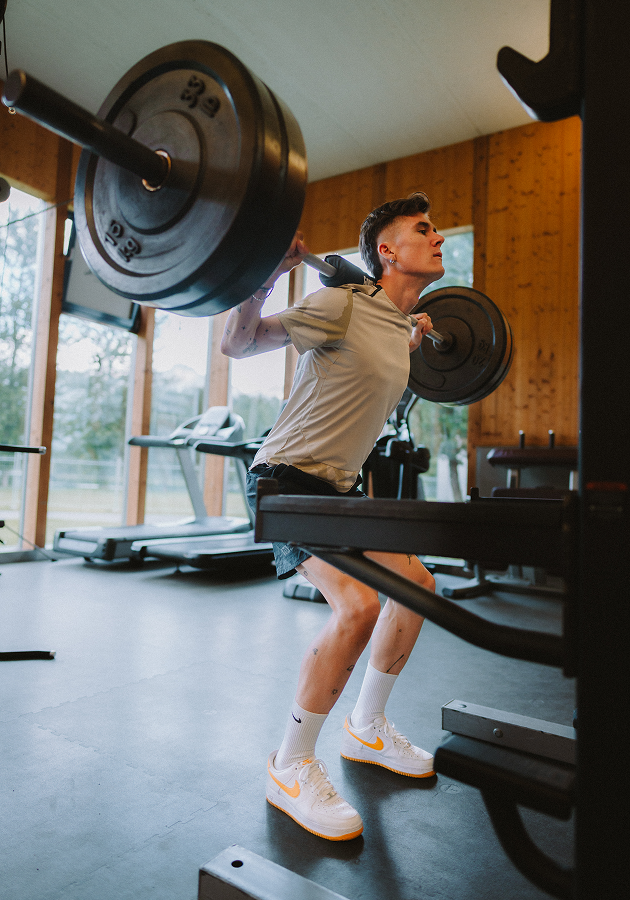
Jakob's weekly schedule includes four strength sessions. On Monday & Wednesday, he focuses more on drills, mobility, and plyometrics. Friday & Sunday are his lifting sessions with weights.
Drill Sessions
Jakob describes his Monday sessions as "5 or 6 different drills and then we go to the stairs and then we have probably three sets of six or eight different exercises. Then we usually finish off with some strides." The drills may involve dynamic movements or skips, but will change depending on the season to keep things fresh. Wednesday is similar, but involves more vertical drills like hops & jumps, with some hurdle mobility drills as well.
Lifting Sessions
Jakob lifts weights on Fridays and Sundays. On Friday he lifts in between his two easy runs, while on Sunday it is a standalone session (typically in the afternoon after a longer morning run). His workout is typically the same for both days, but volume varies. He will often do 2 sets on Friday and 3 sets on Sunday.
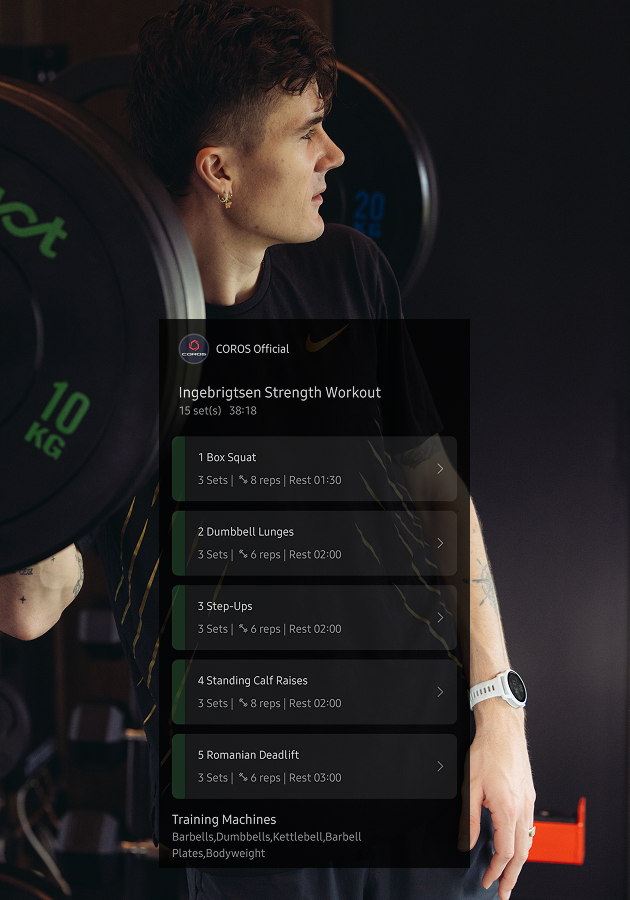
Ingebrigtsen Strength Workout (Download Here):
- Quarter Squats (8 Reps)
- Lunges (6 each leg)
- Step-Ups (6 each leg)
- Calf Raises (8 Reps)
- Romanian Deadlift (6 Reps)
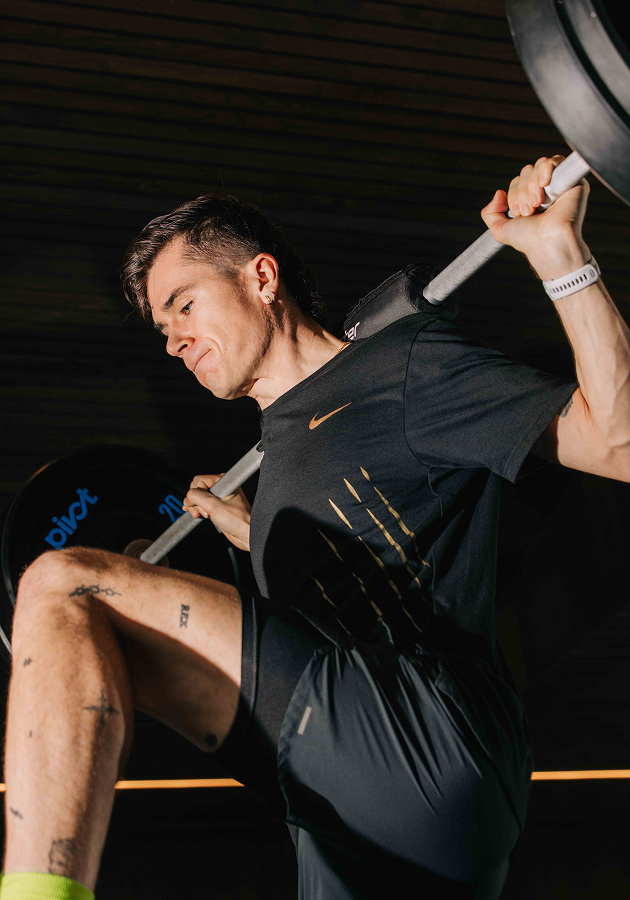
When approaching these lifts, Jakob tells runners to focus on how you initiate your movements. The goal is to create force quickly and deliberately when the rep begins, then stay controlled through the rest of the motion rather than rushing to the finish. If the weight forces you to rely on momentum late in the rep, it’s too heavy. Prioritizing control lowers injury risk and better matches the demands of running.
Adjustments & Seasonal Changes
Of course, Jakob's strength routine isn't always the same exact workout. While the movements don't often change, he makes other small adjustments. "It is very easy to adjust different exercises: going from double foot to single foot, changing the weights, changing the reps," he says. He may also adjust the height of the step-ups or the speed of his movements.
Each season, he also re-evaluates the entire routine to make sure it is as relevant to his performance goals as possible. "I have been lifting maybe for 13 or 14 years. And the routine has been adjusted probably every year since I started," Jakob notes. "What's nice is that it's very easy to say 'This certain exercise is not too specific anymore. So let's add this one.'"
Of course, just like his in-season and out-of-season running looks different, so does his strength training. Winter training contains more volume (sets & reps), and has a stronger focus on gaining adaptations. The summer training contains fewer reps and less weight. "You're trying to be a little bit more explosive and specific," he says. "And you're trying to just stimulate the nervous system and maintain the work that you have been building during the winter."
Advice for Fellow Runners
Jakob encourages every runner to include strength training in their weekly routine. Without it, you risk losing control when you get tired.
"It shows in the running, if you are too weak to keep good mechanics and a good position, especially with the hips and lower back. Everybody gets tired when racing or even training, but you don't want it to affect you too much. So it's all about trying to keep good composure. Keep the mechanics as stable as possible. You need to have control of it so you can do it correctly."
Starting a strength routine can be daunting for most runners, so Jakob has advice for beginners. "I would say start small, just do something and you can kind of build from there." Soreness could hit after the first few times, but your body will adjust. "That's just a way of your body telling you that you're doing something that you're not used to," he says. Jakob notes that he doesn't get sore very often, which is a reflection of his consistency. Doing the work, even if it is limited, is key. That is where Jakob's final piece of advice comes in: accessibility.
"It is all about finding a routine and having access. You want it to be easy. You want it to be accessible so that you're actually doing it. I think that's a good tip for everybody. Make a couple of different programs, but at least have something very short, very efficient that you can do if you have very short time or if you're just having a bad day. Something that you're able to do no matter what."
Consistency is what converts good intentions into progress. Jakob Ingebrigtsen’s strength routine shows that when you make training accessible and aligned with your goals, it becomes a sustainable force behind better running. To get started, try Jakob’s workout above or explore other strength routines in our COROS Workout Library.
/filters:quality(90)/fit-in/576x432/coros-web-faq/upload/images/14f649340ab6c20a52eca1e59d95f539.jpg)
/filters:quality(90)/fit-in/576x432/coros-web-faq/upload/images/8cad1483cef1e9cda5f752e1184d84d9.png)
/filters:quality(90)/fit-in/576x432/coros-web-faq/upload/images/6377b5c30512767a96d3132809b1046a.png)
/filters:quality(90)/fit-in/576x432/coros-web-faq/upload/images/f022ae42f504c192ad110ccf91a257dd.jpg)
/filters:quality(90)/fit-in/576x432/coros-web-faq/upload/images/ac406aff8c98a154d954d1dd38553eca.jpg)
/filters:quality(90)/fit-in/576x432/coros-web-faq/upload/images/35b24c5d17c79770c3e4b15413f47bb5.jpg)
/filters:quality(90)/fit-in/576x432/coros-web-faq/upload/images/a29e1b83ea8be94c5a1a0c6b309273e4.png)
/filters:quality(90)/fit-in/576x432/coros-web-faq/upload/images/7a9d2d79f5661d4341ddf39eb6772741.jpg)
/filters:quality(90)/fit-in/576x432/coros-web-faq/upload/images/57e8b7a39e6dd11a3381fb8a724ee6d0.jpg)
/filters:quality(90)/fit-in/576x432/coros-web-faq/upload/images/727ec9ec3d848a15d9ff6f8ebe33aa0d.jpg)