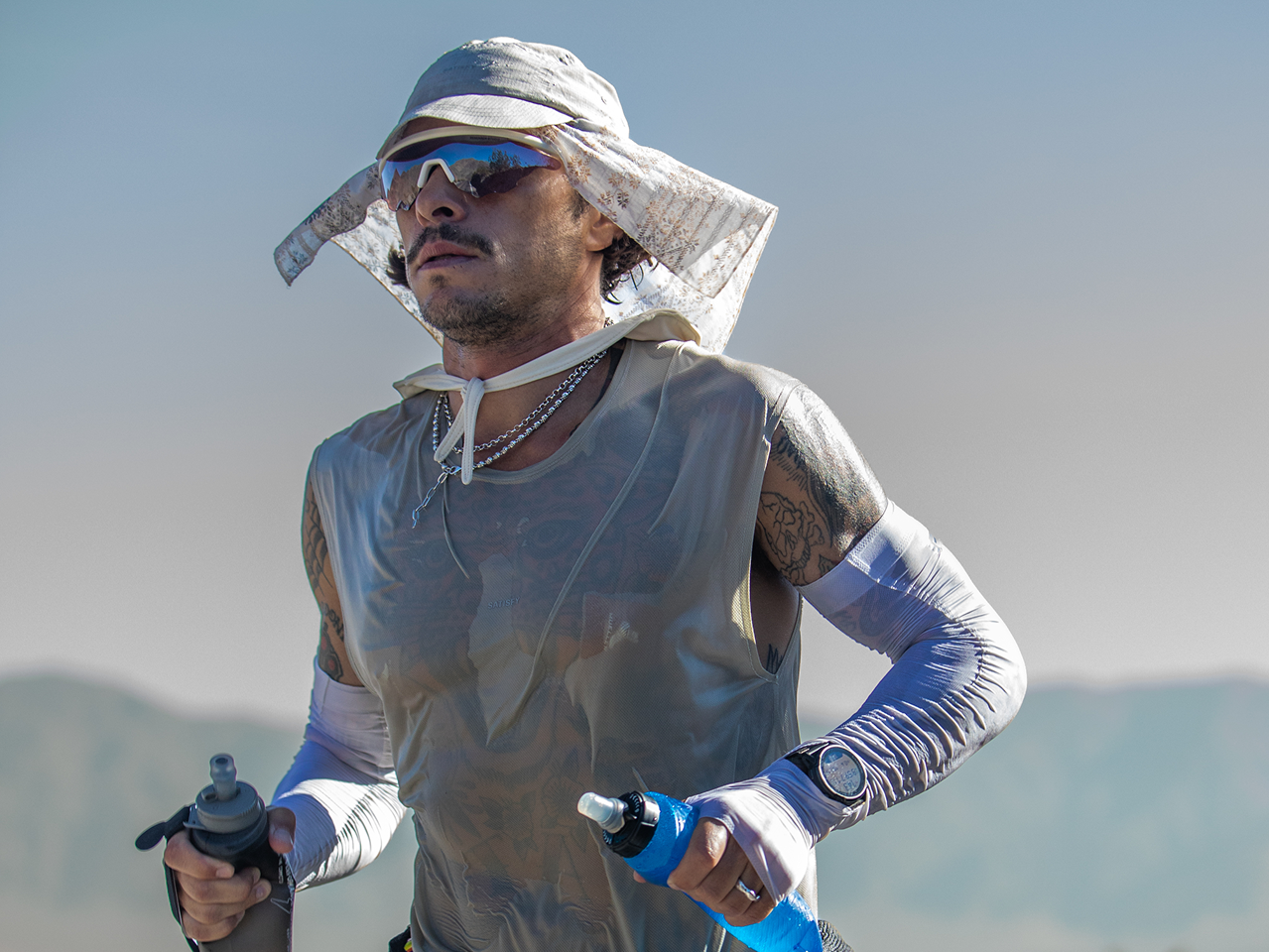


Max doesn’t talk about Cocodona 250 like a race. He talks about it more like an experience. His official result was a DNF 12 miles from the finish, but the story (and what he took away from it) is so much more.
In 2026, he returns to the start line as a new COROS athlete, but more importantly, as someone with unfinished business. The course is familiar this time. It’s a place where something was taken from him—and where he intends to take it back.
Last time he was here, he made it 238 of the 250 miles. He was close enough to taste the finish... and then was rushed to the hospital.
The Storm before the Storm
The story of 2025 begins a week before the start, in the quiet, uneasy realization that something wasn’t right.
Max woke up sick the Monday before the race. At first, it felt manageable. A sore throat. Something that could pass. He told himself what athletes always tell themselves: I’ll feel better tomorrow.
Tomorrow never came.
Each morning brought a heavier weight in his chest and the same cough that dug a little deeper. By the time he arrived in Arizona, he hadn’t slept in days. Nights passed in fragments—coughing, staring at the ceiling, convincing himself this was temporary.
Even then, he believed he could outlast it. This certainly wouldn't be the first time time Max had outlasted pain and pushed through discomfort.
That belief followed him to the start line. It followed him into the first climb, where his legs felt good, but his lungs betrayed him. Every breath was shallow, interrupted. Every exhale came with something he couldn’t ignore.
What have I gotten myself into?
Fear was the backdrop of his race. It lived in the space between aid stations, in the long stretches where doubt had time to grow. The distance didn't scare him, but the thought that his body was failing in other ways—namely breathing—did.
There was no grand strategy, just a singular focus on getting to the next aid station. Then the next. Then the next.
Hours turned into a day. Then another.
Somehow, he moved up through the field. By the time he was deep into the race, he had climbed into the top ten. From the outside, it looked like resilience. Like strength. Inside, it felt like survival.
“I probably should have dropped,” he would later admit. “But I just never gave myself the option.”
By the time he reached the penultimate aid station, he still held onto the belief that finishing was inevitable. He had already covered more than 200 miles. He had endured the sickness, the exhaustion, the slow unraveling of his body. Twelve miles remained.
The final termination of his run didn’t happen dramatically. No sudden collapse. No singular moment of failure. He sat down. Rested. And when he tried to stand again, his body didn’t respond.

He didn't choose to stop, but there was nothing left to negotiate. His feet, inflamed and infected from days of exposure, had developed cellulitis. He couldn’t get his shoes back on. Couldn’t stand. Couldn’t take a single step.
“I was dead set on finishing,” he said. “But I couldn’t even stand up. How am I going to walk if I can’t even stand?”
For the first time in his racing career, he didn’t finish.
Strategic Vengeance
Max doesn't see what happened at Cocodona as failure. Not now.
"If I had let that get the best of me," he says, "that would have been failure."
He still came away with valuable information. It was brutally honest and acquired the hard way, but information nonetheless. So, with that in mind, he got to work planning his 2026 run.
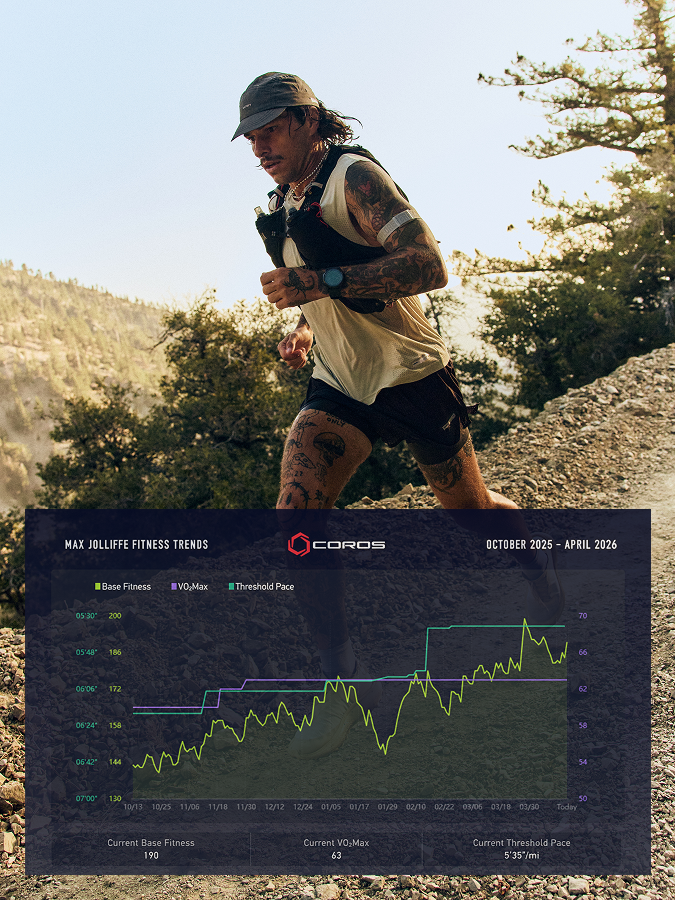
The first lesson was the hardest to admit. He suspects overtraining during his build-up left his immune system vulnerable heading into the taper.
"This year I have been more mindful about this and have dialed back the volume slightly from last year, which my body and overall health have seemed to be responding well to."
Less, it turns out, has meant more. The fitness numbers have blossomed. His COROS Base Fitness has climbed from 141 to 190 during this build. His VO2 max has risen from 60 to 63. His threshold pace has dropped from 6:18 per mile to 5:35. So, while volume has been reduced from last year, his enhanced fitness has allowed him to up the intensity.
"I've been maintaining some solid running volume over the last three months, most weeks between 130 and 140 miles, while also being able to mix in a solid amount of strength training, interval work, and heat training," Max says.
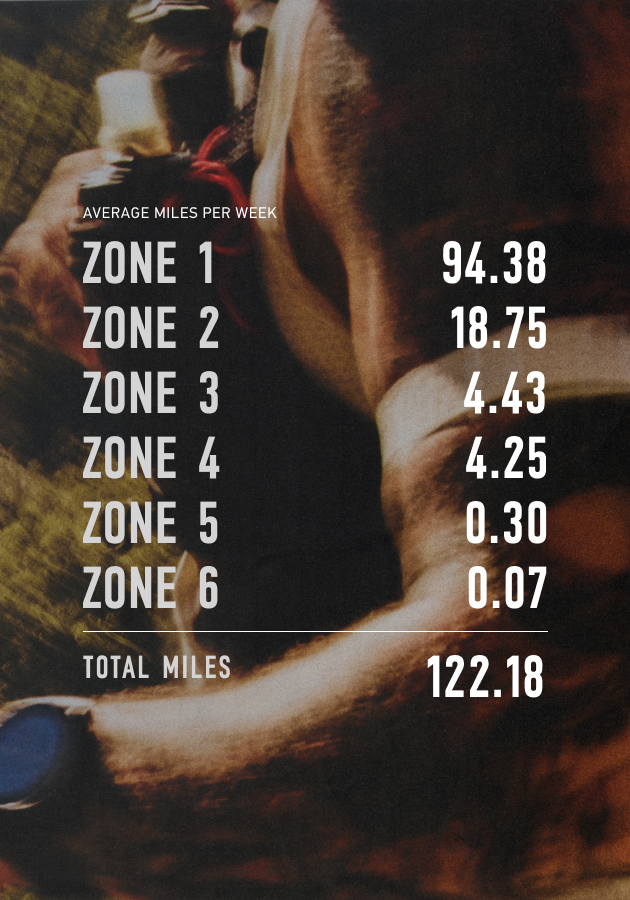
A look at his weekly mileage breakdown shows just how deliberate that balance is. Nearly all of his volume is in heart rate zones 1 & 2, with only a handful in zones 3 & 4, and anything above threshold is nearly out of the question. All of his training is specific for races of 200-plus miles.
Another key takeaway was the lack of information he was able to reflect on. Last year, before Max was with COROS, his watch died and the file corrupted partway through the race. There is no clear history to look back on and plan his 2026 strategy with.
That changes this year. As a COROS athlete, Max now has a watch built for exactly this kind of effort. Turn-by-turn navigation keeps him on course, and fuel reminders prompt him before his energy runs low. The COROS Heart Rate Monitor and COROS POD work in tandem to make sure every session (even heat training on a treadmill) reflects what's actually happening in his body.
Fueling the Fire
The fear of what this race can do to a person hasn't gone away. Max wouldn't want it to.
"I think it's good to have a little bit of doubt," he says. "It keeps you honest."
These races are too long, too unpredictable for false confidence. Max still considers himself a rookie in the 200-mile game — still learning, still making mistakes, still searching for what a clean race at this distance even looks like. Every attempt has come with its own unraveling. Some lessons only reveal themselves after hours of consequence.
But doubt, he's decided, doesn't have to be a weight. It can be something sharper.
"Doubt can be fuel."
So he uses it. In training, in preparation, in the small decisions that quietly stack into something larger. It keeps him from taking shortcuts, from ignoring what his body is telling him, from arriving at a start line already broken.
This year, the goal is straightforward. Not a podium — though that's always somewhere in the back of his mind. Something simpler, and somehow heavier.
A finish.
He doesn't talk much about competitors. When he does, it's with genuine respect. The race itself is a big enough opponent. Cocodona beat him last year. Twelve miles from the end, with nothing left to negotiate, it took something from him.
"It's me versus the course," he says. "The race beat me last year. I need to get it back."
He arrives this year with clarity — about his body, his preparation, and the narrow space between pushing forward and knowing when not to start at all. The lessons of 2025 are packed and ready. Not to haunt him, but to guide him.
Twelve miles doesn't feel abstract anymore.
It feels close enough to reach. And far enough to demand everything he has.